
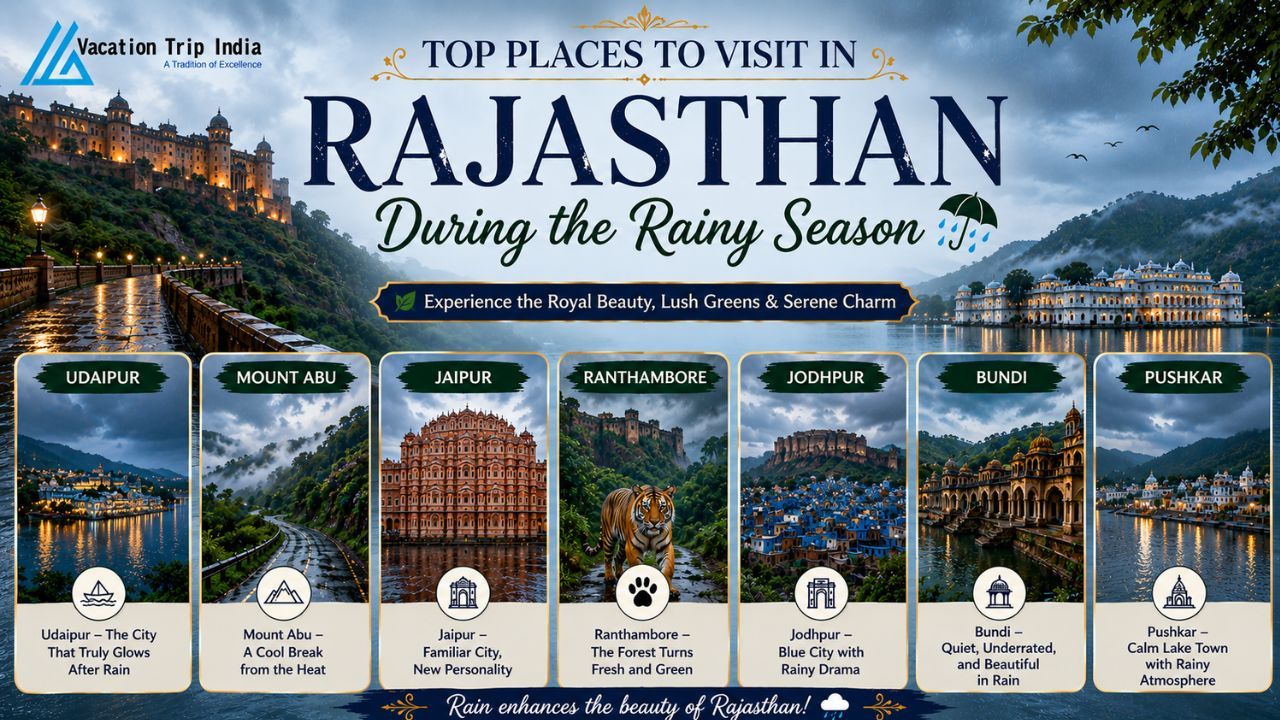
Rajasthan usually brings one picture to mind—hot deserts, golden sand dunes, and strong sunlight almost all year round. But the rainy season quietly changes that image. It doesn’t turn Rajasthan into a completely different world, but it definitely softens it. The colors feel richer, the air feels lighter, and the landscapes become unexpectedly refreshing.
If you’ve only seen Rajasthan in peak summer or winter tourism videos, monsoon will surprise you in a good way. It’s slower, calmer, and honestly a bit more personal. You don’t feel like you’re rushing from one attraction to another. Instead, you start noticing small things—the smell of wet earth, clouds moving over forts, and lakes filling up again.
Let’s explore some of the best places to visit in Rajasthan during the rainy season in a real, practical way.
Udaipur – The City That Truly Glows After Rain
Udaipur is one of those cities that already feels special, but during monsoon, it becomes something else entirely.
The lakes here—especially Lake Pichola and Fateh Sagar—look completely alive when the rain arrives. Water levels rise, reflections get sharper, and the whole city feels refreshed. The surrounding Aravalli hills slowly turn green, which is not something you associate with Rajasthan normally.
What stands out most is the mood. Even a simple walk near the lake in light rain feels peaceful. You don’t need a long checklist of things to do here. Sit at a lakeside spot, watch boats move slowly, and just take in the weather.
Udaipur during monsoon is less about sightseeing and more about experiencing.
Mount Abu – A Cool Break from the Heat
If you’re anywhere in Rajasthan during rainy season and want to escape the heat completely, Mount Abu is where you go.
It’s the only hill station in the state, and during monsoon, it actually feels like one. Clouds move low over the hills, sometimes covering roads in mist. The air gets cooler, and everything feels slower.
Nakki Lake is the center of most activity here. On rainy days, it becomes calm and reflective, surrounded by fog-covered hills. Small cafes around the lake also become nice places to just sit and relax.
Even simple places like viewpoints feel different during monsoon because you’re often looking at layers of clouds moving across valleys.
Jaipur – Familiar City, New Personality
Jaipur is busy, colorful, and energetic most of the year. But when the rain comes, the city slows down just a little—and that’s when it becomes interesting in a different way.
The pink buildings look deeper in color after rain. Streets feel cleaner. And forts like Amer Fort suddenly have this dramatic backdrop of moving clouds and distant rain showers over the hills.
There’s something nice about exploring Jaipur in light rain—you still get the history, the architecture, and the markets, but without the harsh heat that usually comes with it.
You can move between:
- Amer Fort in the morning
- City Palace in the afternoon
- Nahargarh Fort for sunset views
And everything feels a bit more comfortable than usual.
Ranthambore – The Forest Turns Fresh and Green
Ranthambore is best known for wildlife, especially tigers. But monsoon changes the whole forest experience.
The dry and dusty landscape turns green. Small water bodies fill up. Birds become more active. Even the air feels different inside the forest.
Now, it’s true that tiger sightings can be less predictable during monsoon because of thicker vegetation, but that doesn’t make the safari less enjoyable. In fact, many travelers like it for the natural beauty alone.
Instead of just focusing on spotting animals, you end up appreciating the forest itself more—the sounds, the greenery, and the overall calm environment.
Jodhpur – Blue City with Rainy Drama
Jodhpur has a very strong identity. The blue-painted houses, narrow lanes, and massive Mehrangarh Fort already make it unique. During monsoon, the city gets a new layer of beauty.
Dark clouds rolling over the blue city create a striking contrast. From the fort, you can often see rain falling in the distance over the desert plains, while parts of the city stay dry.
The atmosphere feels dramatic in a natural way—no filters needed. Even walking through the old city streets during light rain feels different because everything looks more saturated and alive.
Jodhpur in monsoon is less about comfort and more about visual experience.
Bundi – Quiet, Underrated, and Beautiful in Rain
Bundi is one of those places that many travelers skip, but monsoon is actually a great time to visit.
The town is small, surrounded by hills, and full of old architecture. When it rains, everything feels softer—the colors of the buildings, the greenery on the hills, and even the pace of the town.
The view from Taragarh Fort is especially impressive during cloudy weather. You see the entire town below with clouds drifting over it slowly.
There’s no rush in Bundi. That’s its biggest charm. You walk, you observe, and you take your time.
Pushkar – Calm Lake Town with Rainy Atmosphere
Pushkar has a spiritual and relaxed feel throughout the year, but monsoon makes it even more peaceful.
The lake fills up and the ghats become more lively but still calm. The surrounding desert areas turn slightly green, which adds an unexpected softness to the landscape.
The town is small enough to explore on foot, and rainy weather makes that experience even better. You can stop at cafés, sit near the lake, or just wander without any strict plan.
Pushkar is not about sightseeing pressure—it’s about slowing down.
What Travel Feels Like in Rajasthan During Monsoon
Traveling in Rajasthan during the rainy season is not about perfect weather or perfect schedules. It’s about flexibility.
You might get a sunny morning and a rainy afternoon. Plans might shift slightly. Roads might slow down. But that’s also what makes it feel more real.
You notice things differently:
- The smell of wet soil in old forts
- Clouds moving over desert landscapes
- Sudden cool winds after rain
- Fewer crowds at popular spots
It feels less like a “tour” and more like a journey guided by nature.
A Smooth Travel Option
For travelers who prefer a well-planned experience without stress, Vacation Trip India often helps in arranging customized Rajasthan journeys that match the monsoon season vibe—slow travel, scenic routes, and comfortable stays without rushing the experience.
Simple Practical Tips
If you are planning a monsoon trip, a few basic things help a lot:
- Carry a light rain jacket or umbrella
- Wear comfortable walking shoes
- Keep your schedule flexible
- Avoid long desert drives during heavy rain
- Book stays early in cities like Udaipur and Jaipur
Nothing complicated—just small adjustments.
Conclusion
Rajasthan in the rainy season is not the Rajasthan most people imagine. It’s softer, greener in parts, and more atmospheric. The deserts don’t disappear, but they share space with clouds, lakes, and cooler winds.
From Udaipur’s lakes to Mount Abu’s misty hills, from Jaipur’s royal streets to Bundi’s quiet corners, every place feels slightly more emotional during monsoon.
If you like travel that feels natural, unhurried, and a little bit reflective, this is a great time to explore it.
FAQs
1. Is Rajasthan worth visiting during the rainy season?
Yes, it offers peaceful travel, fewer crowds, and beautiful seasonal landscapes.
2. Which place looks best in monsoon in Rajasthan?
Udaipur and Mount Abu are the most visually striking.
3. Does rain affect travel plans in Rajasthan?
Sometimes, but usually only briefly. Flexibility is enough.
4. Is it safe to travel in Rajasthan during monsoon?
Yes, it is generally safe with normal travel precautions.
5. What is the biggest advantage of monsoon travel here?
The transformation of landscapes—everything feels fresher, greener, and more alive.